Stitching together connections
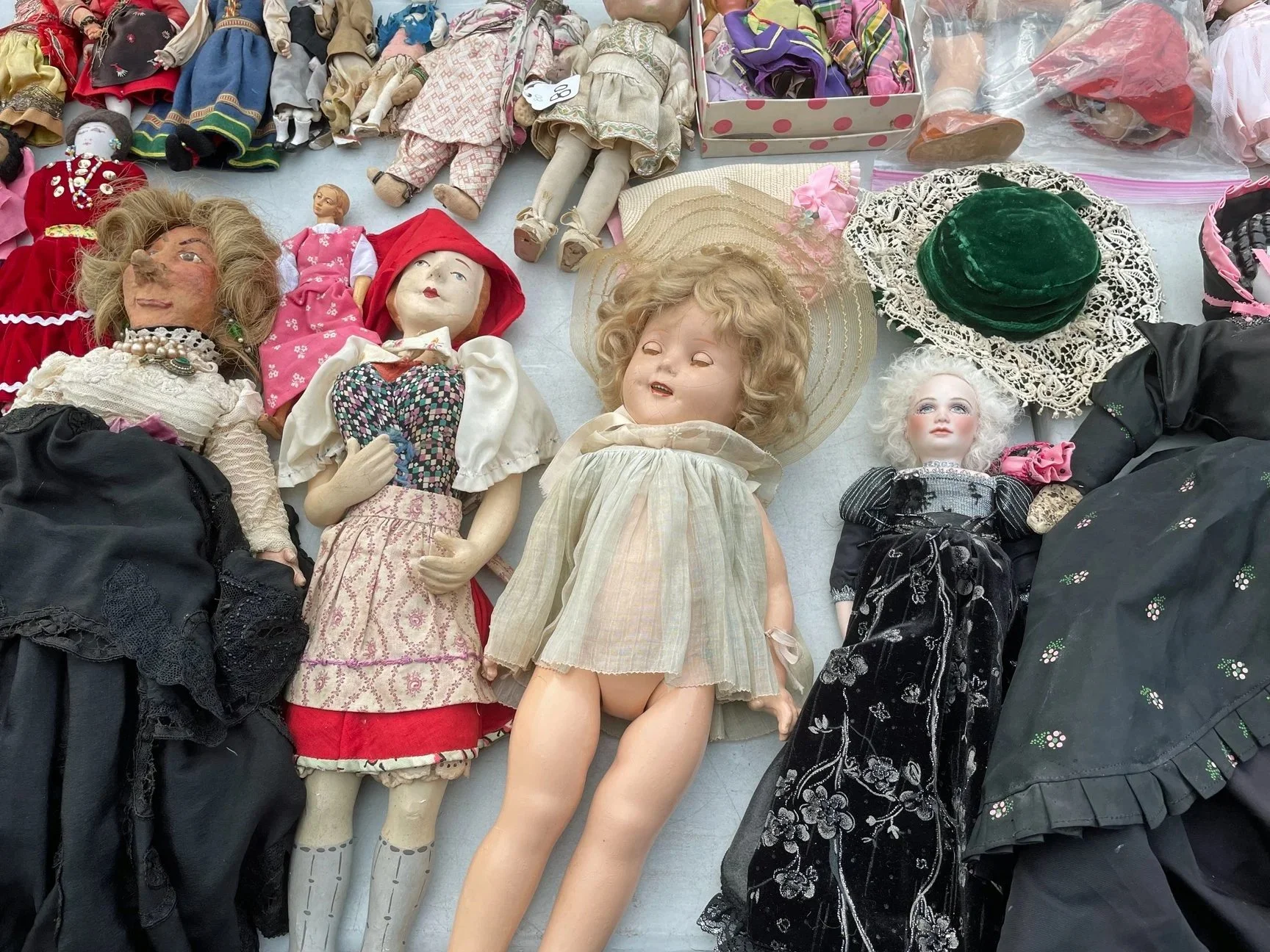
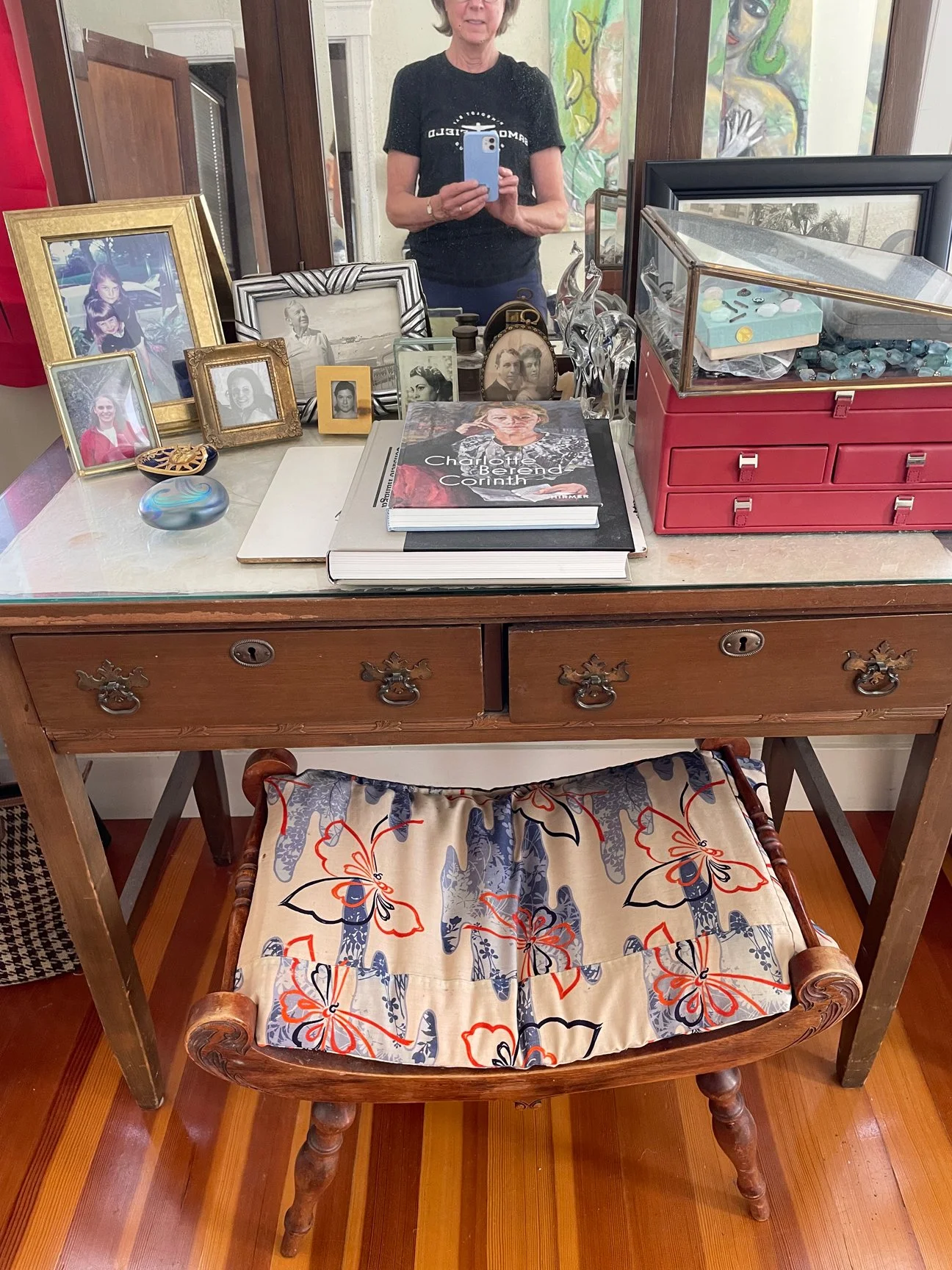
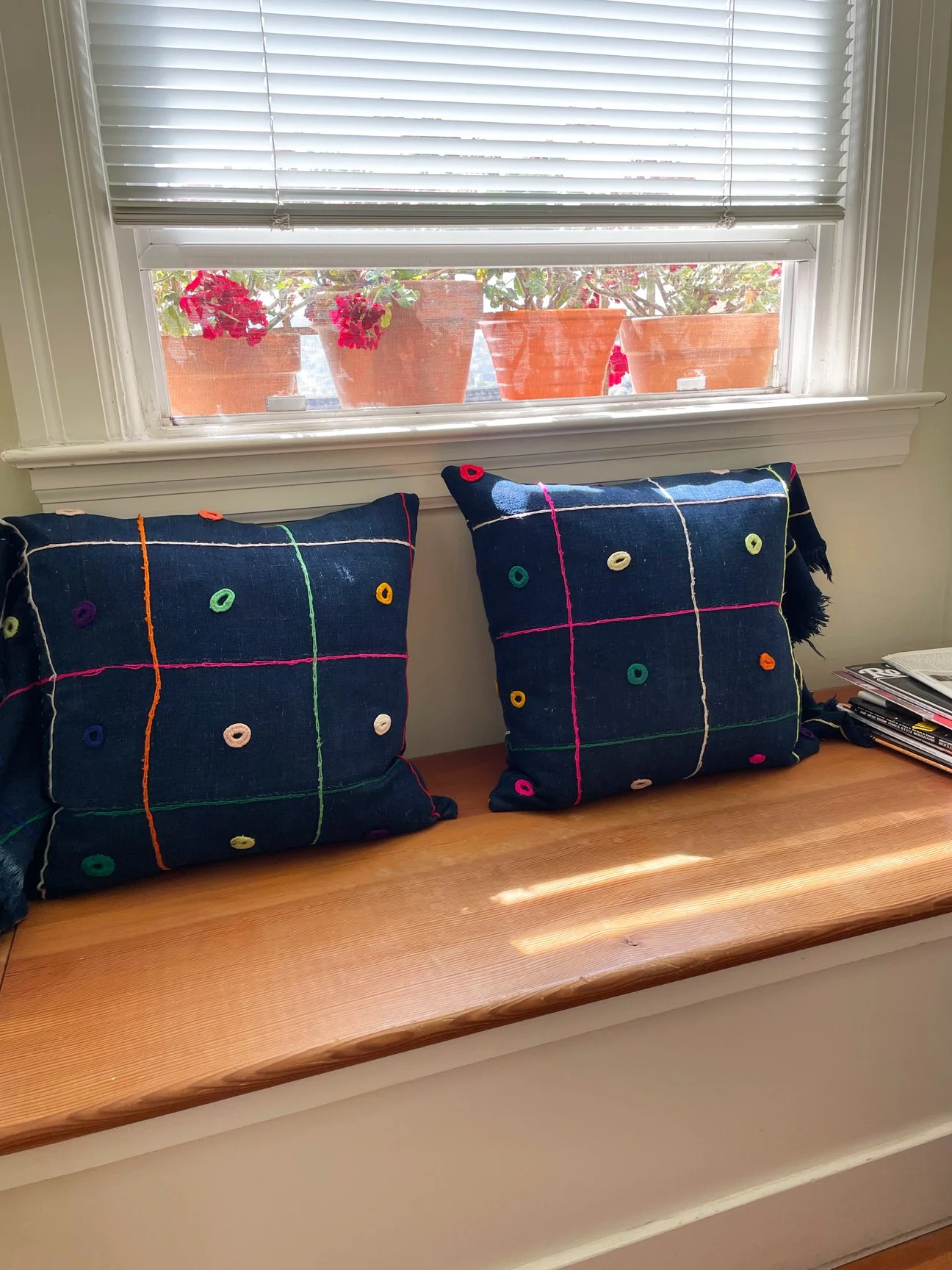
About a year ago I went to the Alameda Flea Market with my daughter Jo to see what we could find among the assortment of clothing, furnishings and memorabilia from different countries and eras. I found an indigo blanket from Mali which had a 50 year anniversary message which resonated, having been together with my husband for almost that long. Jo found a silk wrap from Japan which she thought could make a nice table runner for her apartment she shares with her newly wed husband. Exploring more, I found a hand stitched Kantha fabric from India I loved, and suddenly I was fabricating a new quilt for our marital bed, to replace the worn paisley pattern from Pottery Barn we’ve had forever. By the time we were ready to leave I’d also picked up more African fabric with visions of throw pillows, one adorned with colorful crochet rings, plus a Japanese silk apron with butterflies and garden flowers, to recover my mother’s vanity table bench.
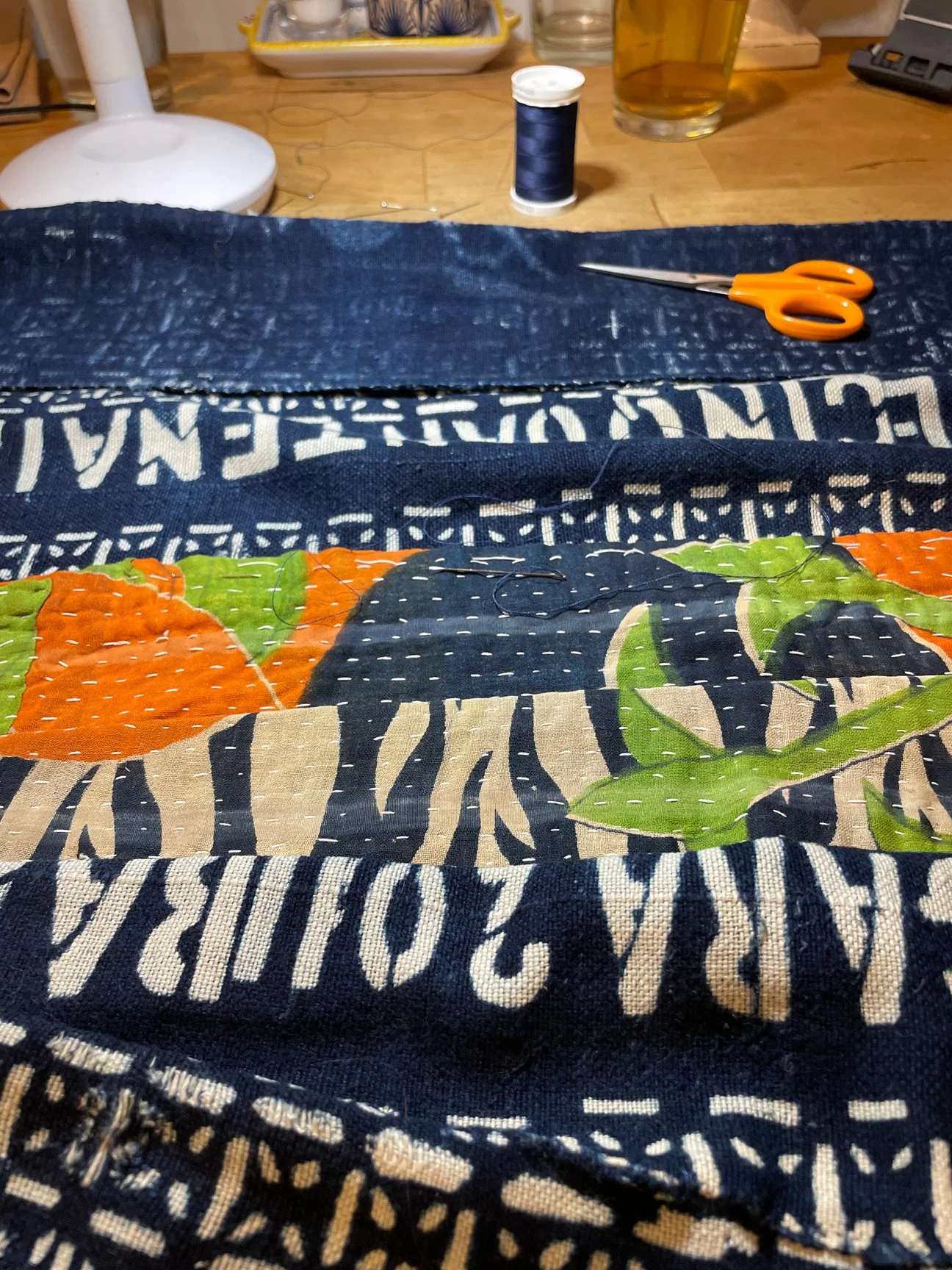
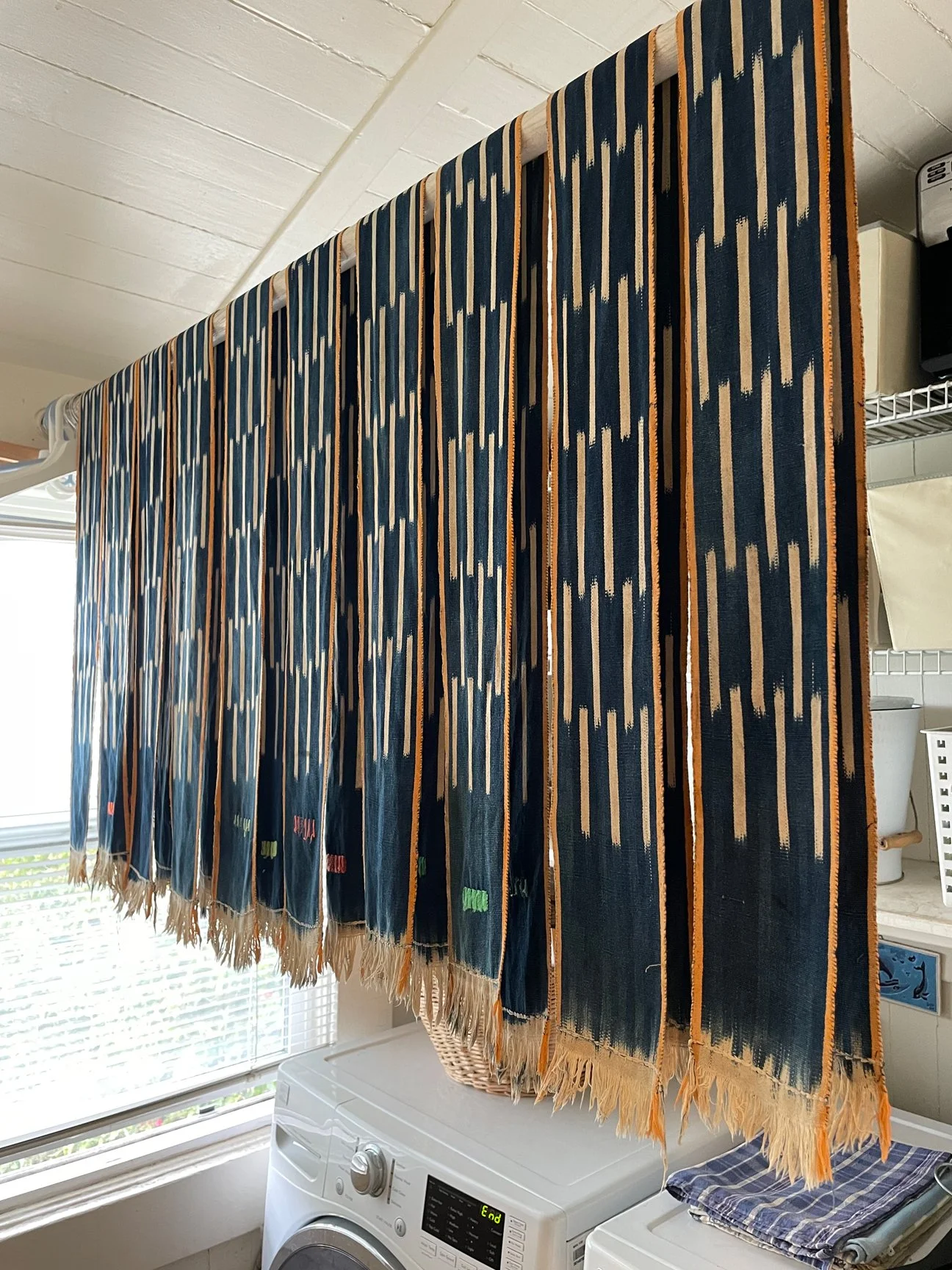
Once home I tried draping the fabric over the various surfaces and plotted how to make everything come together and then another year went by as the fabric sat underneath my mom’s vanity table. Now that I am officially retired this year, I didn’t have many good excuses to prolong the vision, plus I was so tired of our old bedding and if any time was ripe for a change this was it. Fortunately I had ordered a navy linen duvet cover to use as a base on which I would construct my quilted fabric pieces. The Indian quilt served as the centerpiece, with worn use and subtle stains leftover after dry-cleaning. The fabric from Mali was unraveling in sections which I cut out and repositioned as headers and footers for the duvet. The coverage was still in need of border trim so I separated another African blanket into strips, which is how it was constructed from hand woven sections on a back-strap loom. All but the corners were covered and I went to my crowded craft storage closet and pulled out some fabric from Scotland my husband and I bought there to adorn our outfits for a friend’s 70th birthday party we attended.
I hand stitched these disparate pieces of fabric together at the kitchen table while catching up on tv series and cooking shows, and wondered during commercials about the history of each segment and what the weavers and sewers had used each piece for. The blanket header from Mali says Bandiagara 1960-2010, referring to the Land of the Dogons, an eroded landscape of tablelands, gorges and plains that is inhabited by the traditionally living Dogon people. The footer says cinquante naire, which refers to Mali’s 50 years of independence from France, before the Mali war of 2012 began. Was this blanket made in celebration only to be discarded and sold once the owner’s fortunes changed? Adding the border fabric reminded me of the marriage blankets my friends at Petel Design used to sell from Mauritania. They told me how each strip was woven on a back strap loom usually tied and anchored to a tree. Once all the strips were woven they were stitched together to form the blanket which would be given for a marriage. Then adding the wool corner patches from Scotland I was reminded of my trip there with my father before I got married, as we traced our Davison heritage to a pub near Inverness where we found the Davison crest and motto “always sincere”. The fact that my father was born in Japan to missionaries, made the Japanese cushion cover and throw pillow a sentimental addition. The Japanese silk was worn in places and had a pink felt backing with ties, making me think it could have been used as an apron somewhere along its journey. I had indeed fabricated quite a collection of textile memories.
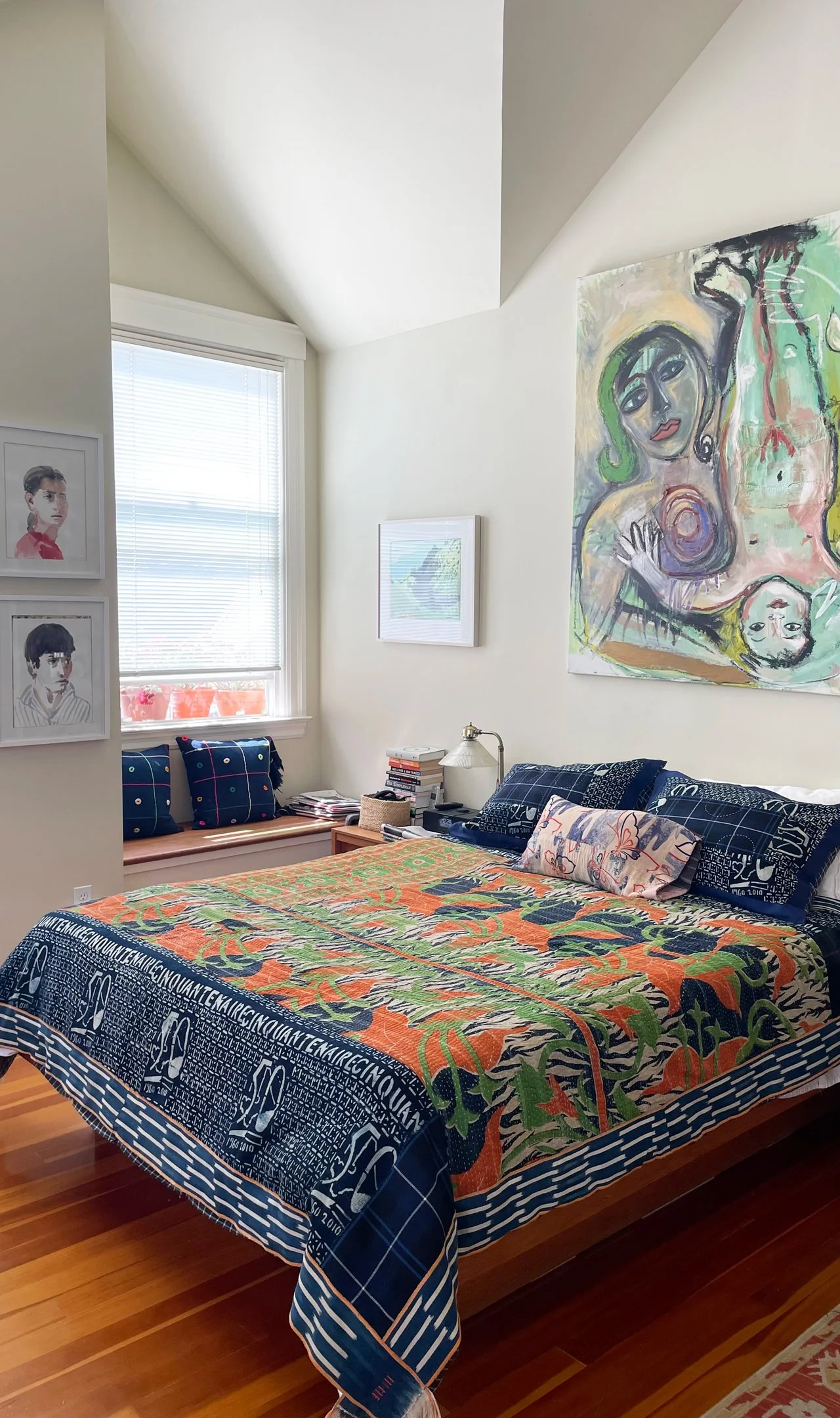
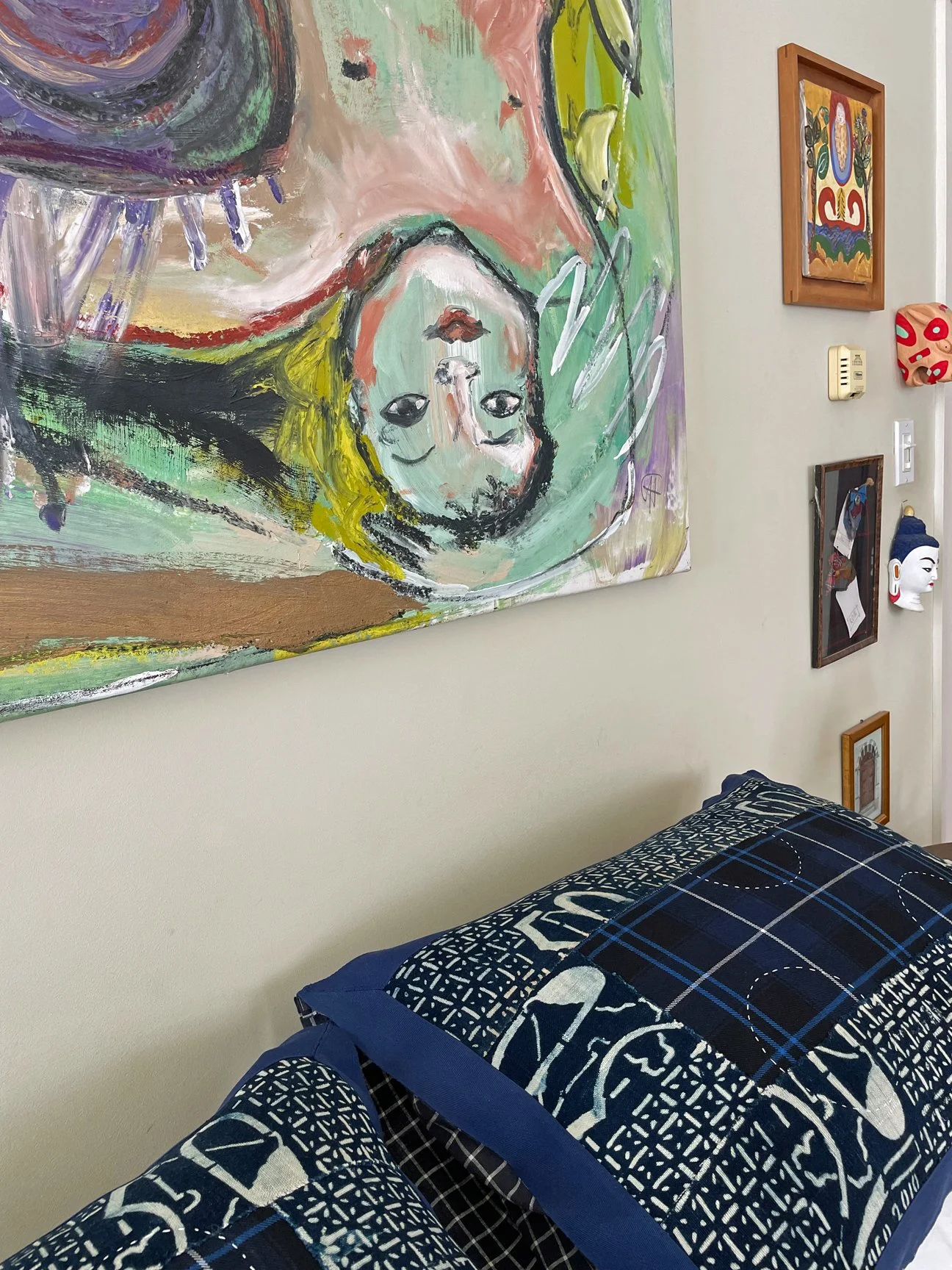
Sewing the completed quilted onto the deconstructed linen duvet cover was not a task for my limited seamstress skill set, but I managed to fit it all together and would ask that no one look at the undersides very carefully. But I was quite pleased how it all came together, a little like cooking without a recipe, the fabric or ingredients inform you if you pay attention and respond accordingly. The best part was that my husband Rob, who doesn’t really care for change, could see the work I’d put into everything and thought it looked good, if not a little busy, especially when I’m reading in bed with my India jungle print pajamas. He’s right of course, but what I see are pieces of old memories, mixed with the future that this quilt will be present for, with a feeling of pride, hope and connection.